
Could AI Help Mauritius Avoid Another Water Crisis?
Examples of AI water management in seven countries, plus solar desalination in South Africa and Rodrigues and lessons for Mauritius.

13 min read Updated
Contents
I’m Mauritian and I run my business here. It’s difficult to see people in Camp-Levieux struggling to get water, especially when we seem to face the same shortages year after year. Having running water at home should not be something families have to worry about.
I wanted to understand what could be done differently, so I looked at how other countries find hidden leaks, prepare for shortages and produce more freshwater. Given my work in AI, some of the solutions I came across were particularly interesting.
I thought I would share what I found. These may not all be suitable for Mauritius, but perhaps someone at the CWA, in government or elsewhere will find an idea worth exploring before the next crisis.
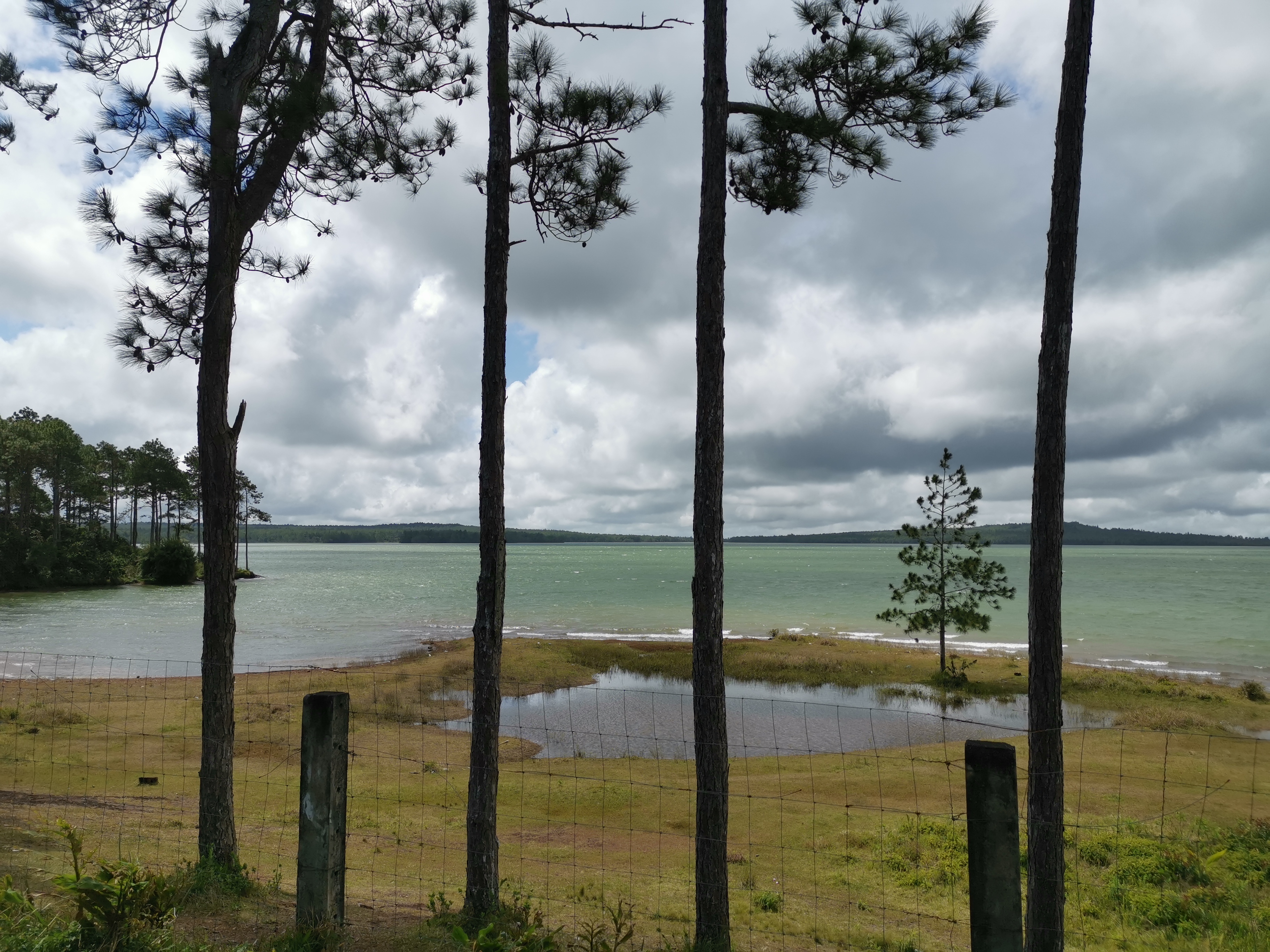
What I learned about our water problem
Mauritius depends heavily on rainfall, while weaknesses in our water network make dry periods more difficult to manage.
In October 2026, production at the La Marie treatment plant reportedly fell from around 110,000 to 56,000 cubic metres per day as the available water supply diminished. When reservoirs run low, producing enough drinking water becomes harder.
But here is the finding that changed how I looked at the problem.
The National Audit Office's report on water management found that around 60% of water produced by the CWA was classified as non-revenue water in 2024.
That does not mean 60% simply leaked away. It includes physical leaks, inaccurate meters and water consumed without being billed. The audit nevertheless identifies ageing and defective pipes as a major concern.
Think of the situation this way. We can collect and treat more water, but if a significant amount never reaches households because of damaged pipes, we are still leaving part of the problem untouched.
That led me to a question: could we identify hidden leaks sooner and avoid wasting so much of the water we have already treated?
Which countries are already using AI to manage water?
I found several concrete projects. Their approaches differ, but each addresses a problem Mauritius also faces.
1. United Kingdom — finding hidden leaks by satellite
SES Water was facing a familiar problem: a leak can run for weeks beneath a road or field without any visible water at the surface. Inspecting every kilometre of pipe would consume too much time.
The company worked with SUEZ and ASTERRA to survey more than 1,000 kilometres of water mains using satellite radar. The technology identifies underground conditions consistent with leaking water. These potential locations were placed over the utility's pipe maps, giving technicians a much smaller area to investigate. They still used acoustic equipment on site to confirm each leak.
What happened: The satellite survey highlighted 211 possible locations and field teams confirmed 219 leaks over 59 inspection days. According to SUEZ, 94% were hidden below the surface, and the utility reported saving 900,000 litres a day.
Why it matters for Mauritius: The value is not a satellite replacing a technician; it is directing scarce repair resources towards the streets and pipes most worth checking. These figures are project-partner claims, not guaranteed savings for the CWA.
2. United Kingdom — listening to pipes with AI
United Utilities already had thousands of acoustic devices listening to its water pipes, but they were producing around 600 alarms every day. Employees had to spend considerable time checking recordings before knowing which alerts justified a visit.
With FIDO Tech, the utility began processing the recordings using AI. The software recognises the sound patterns of likely leaks and helps estimate their size, so technicians can prioritise large losses instead of responding to every alarm equally.
What happened: FIDO found that around 72% of alarms were false positives. In the reported comparison, the daily rate of leaks found rose 34.9%, while the overall time that leaks remained active fell 49%. The supplier says the earlier manual review had required work equivalent to seven full-time analysts.
Why it matters for Mauritius: A sensor alone can create more alerts than a team can handle. AI becomes useful when it helps staff distinguish important problems from background noise and get to the right pipe sooner.
Source: FIDO Tech / United Utilities.

Illustrative photograph and licence.
3. Singapore — detecting unusual pressure and water flow
Singapore's PUB oversees a network of around 6,000 kilometres of underground pipes. More than 450 monitoring stations continuously record information about its water system. Even with those sensors, engineers still need to interpret large amounts of data and investigate leaks hidden below streets.
PUB worked with Bentley Systems to build its Anomaly Leak Finder. It compares what the instruments measure with a computer model of how water should flow through the pipes. The model is updated with new readings, and unusually large differences trigger further investigation.
What happened: Historical tests showed over 80% overall anomaly-detection performance. During the first three months cited by Bentley, it detected two real leaks and narrowed the search to less than a kilometre of pipe.
Why it matters for Mauritius: Before an AI platform can help, the water authority needs dependable measurements and accurate pipe maps. Singapore's example is about making existing data actionable, not simply adding more screens.
Source: PUB project described by Bentley Systems, April 2026.
4. Israel — checking whether a repair has really solved the problem
Haifa's water company, Mei Carmel, manages a difficult network serving around 500,000 people, with hilly terrain and more than 100 pressure zones. The company had already invested in meters and monitoring, yet some losses were still hard to explain.
It introduced TaKaDu software to bring together readings from meters, pressure sensors and other sources. Rather than looking at each measurement separately, the software flags unusual behaviour across the network and follows each incident until the readings return to normal.
What happened: In one incident, the system flagged unexpectedly high water flow. Teams repaired two leaks, but the warning continued. A second investigation found a large leak in a hidden stream outside the residential area. TaKaDu estimates that finding it saved approximately US$90,000. The supplier also describes a separate incident involving an incorrectly positioned valve between reservoirs.
Why it matters for Mauritius: A repair report does not necessarily mean the loss has stopped. Monitoring can help verify that the underlying problem really has been resolved.
Source: Mei Carmel case study, TaKaDu.
5. Australia — identifying pipes at risk of breaking
In parts of Adelaide, the soil changes as it gets wetter or drier. That movement puts pressure on buried pipes and can contribute to leaks and bursts. SA Water began testing whether satellite observations of the ground could identify vulnerable stretches before they fail.
Its 2025 Adelaide trial covered more than 820 kilometres of pipes. The aim is to use the information to direct inspections and place leak-detection equipment where it is most useful.
What happened: The Adelaide project remains a predictive trial; the public announcement did not establish a measured reduction in bursts. However, SA Water's 2024–25 annual report describes a separate satellite leak-detection deployment on the Southern Eyre Peninsula, where 196 potential locations were identified and 33 leaks confirmed in the first week. The two activities should not be confused.
Why it matters for Mauritius: The method suggests another use for data: protecting ageing infrastructure before a failure disrupts households. Whether ground-movement monitoring is suitable would depend on our soil conditions and network.
Source: South Australian Government · SA Water annual report.
6. South Africa — controlling water pressure intelligently
In Cape Town, engineers had already divided parts of the network into smaller areas with pressure-reducing valves. But pressure does not need to remain at exactly the same level throughout the day: consumption changes, and excessive pressure can worsen existing leaks or cause pipes to burst.
A trial in the Eersterivier zone, covering 89.3 kilometres of mains and 6,218 connections, used i2O software to adjust pressure according to conditions, while maintaining adequate supply at critical locations.
What happened: The supplier reported 38% lower leakage and 58% fewer pipe bursts in the trial area. It also reported that the approach was subsequently installed in 15 monitored zones. These are figures from the provider's case study, not results across the whole of Cape Town.
Why it matters for Mauritius: Saving water may sometimes mean preventing unnecessary pressure and pipe damage, not just finding a leak after it occurs. Any pressure changes must still protect households at the ends of the network.
7. Portugal — reducing losses without sophisticated AI
Lisbon offers a particularly useful lesson because its starting point was organisational. Its utility, EPAL, needed to know where water was disappearing across a widespread underground network.
It developed WONE, a system that divides the distribution network into over 160 smaller monitored zones. By comparing water entering each zone with what customers use, and watching pressure and flows, teams can identify unusual losses and send technicians to a more precise location. The software supports regular maintenance and pipe renewal rather than replacing them.
What happened: EPAL reports that non-revenue water fell from 23.5% in 2005 to around 8% in 2015. A case study published on the European Climate-ADAPT platform estimates cumulative financial savings of around €68 million over the programme's first decade. These improvements reflect the wider management programme, not software alone.
Why it matters for Mauritius: Good meters, clear responsibility for each zone and consistent follow-up can produce measurable benefits even before introducing advanced AI.
Sources: EPAL · European Climate-ADAPT case study.
Could AI help Mauritius prepare earlier for shortages?
There is another possible use beyond leaks: spotting a shortage before it becomes an emergency.
Reservoir levels, rainfall, water consumption and treatment output can be analysed together. That could help authorities test what happens if rainfall remains low, a treatment plant reduces output or demand increases.
It would not mean predicting rainfall perfectly. It would mean comparing possible outcomes early enough for engineers and decision-makers to consider their options.
Which countries have found other ways to produce freshwater?
Reducing losses is one part of water security. We also need enough water to begin with. Several island and coastal examples caught my attention.
Malta — producing drinking water from the sea
The Maltese government reported that around 70% of its drinking-water production came from reverse osmosis in 2025. The country has improved the efficiency of its plants and installed solar panels at some facilities. Source: Maltese Government.
Reverse osmosis is worth distinguishing from older desalination methods that rely heavily on heat. Rather than boiling seawater, it pushes water through specialised membranes that remove salt.
According to the International Energy Agency, modern seawater reverse osmosis typically requires around 2.5–6 kWh of electricity per cubic metre. That is generally far less total energy than traditional heat-based desalination, although it is certainly not electricity-free.
Malta has four reverse-osmosis plants, including one on Gozo. In April 2025 its government reported new solar installations at two plants, expected to generate 1.8 million kWh per year. This does not mean the whole water system operates on solar power. Source: Maltese Government.
South Africa — produce water in the daytime, store it for later
This is an approach I found particularly relevant to Mauritius. At Witsand, a solar-powered reverse-osmosis system was designed to produce around 100 cubic metres of freshwater a day in solar mode. Source: OSMOSUN.
The municipality explained that it operated the plant during the day, with groundwater supplying its reservoirs at night.

There is a simple but important point here: solar panels do not have to produce electricity at the same time people use the water. A plant can use sunshine to produce freshwater during the day and store that water in tanks or reservoirs for evening and night-time use.
Producing water in daylight does not remove the need for pumping, backup supplies or maintenance. Nor does it guarantee solar is the cheapest option everywhere. But storing water, rather than relying entirely on batteries to run the plant at night, is worth evaluating.
There is an economic caveat. The municipality said in 2022 that electricity costs were high, so the plant was particularly useful during dry periods and peak holiday demand. The example combines a solar desalination plant with existing boreholes, reservoirs and backup electricity rather than treating solar as a complete replacement.
Rodrigues — this technology is already close to home
What surprised me most was finding a solar-powered desalination project listed in Rodrigues.
OSMOSUN says its installation at the Hôtel des Cocotiers, developed with Mauritius-based Ecoasis, was designed to produce 20 cubic metres per day on solar power without batteries, and up to 60 cubic metres in hybrid operation.
Source: OSMOSUN Rodrigues project.
Those are the supplier's figures; I have not verified the plant's current operation. But it means there is already a local installation whose experience could be examined.
According to OSMOSUN, this unit serves an 84-room hotel. Its hybrid mode uses an external electricity connection when demand exceeds what solar production can provide. A working example at a hotel is not the same as a public town-wide network, but it offers local operational experience worth examining.
Singapore — using treated wastewater again
Singapore's NEWater programme takes wastewater, treats it to a high standard and uses much of it for industry and cooling. This reduces the amount of drinking-quality water needed for activities that can safely use reclaimed water.
NEWater is made using filtration, reverse osmosis and ultraviolet disinfection. PUB says the purified water is delivered to factories and cooling systems through a dedicated pipe network, while some is used to replenish reservoirs during dry weather before further treatment. Source: PUB.
Canary Islands — using waves to help desalinate seawater
Ocean Oasis has tested a device that uses wave motion to create the pressure needed for desalination, rather than depending entirely on electrically driven pumps. Source: European Commission.
It remains experimental for larger-scale supply. Local wave conditions, cyclone exposure, equipment maintenance and costs would all need careful investigation.
The European Commission's ReWater report documents several sea trials of a full-scale prototype called Gaia. The project validated key components and moved towards a pre-commercial phase; it did not yet establish large-scale reliability or the cost of delivering water to entire communities.
What stood out to me?
These examples offer several distinct ideas: find leaks using satellites; listen for leaks with AI; monitor pressure continuously; check whether repairs actually work; identify pipes at risk; forecast shortages earlier; and produce or reuse freshwater more efficiently.
Not all of these approaches depend on AI. Not all would necessarily work in Mauritius. But they have been used or tested somewhere, and that gives us a much better starting point for discussion than technology in the abstract.
Why I wanted to share this research
I am sharing these examples because Mauritius is home, and I would like to see fewer families dealing with the same disruption every dry season.
They are not substitutes for the immediate assistance people need, or for maintenance, engineering and public investment. I hope they give someone working on water supply — at the CWA, in government or in the private sector — a useful idea to explore.
In my earlier article on Mauritius and AI, I wrote about what technology might mean for our economy. This question is closer to home: could some of what other countries have learnt help us avoid the same water problems next year?
Questions people ask
Can AI locate water leaks in Mauritius?
AI can analyse satellite radar, acoustic signals and flow measurements to identify suspected leaks; CWA teams still need to confirm and repair them.
Does 60% Non-Revenue Water mean 60% of water leaks?
No. Non-Revenue Water includes physical losses, metering errors and water that is consumed without being billed.
Can Mauritius desalinate seawater without much grid electricity?
Solar-powered reverse osmosis can reduce reliance on the grid; wave-powered desalination is promising but not yet established at national scale.